

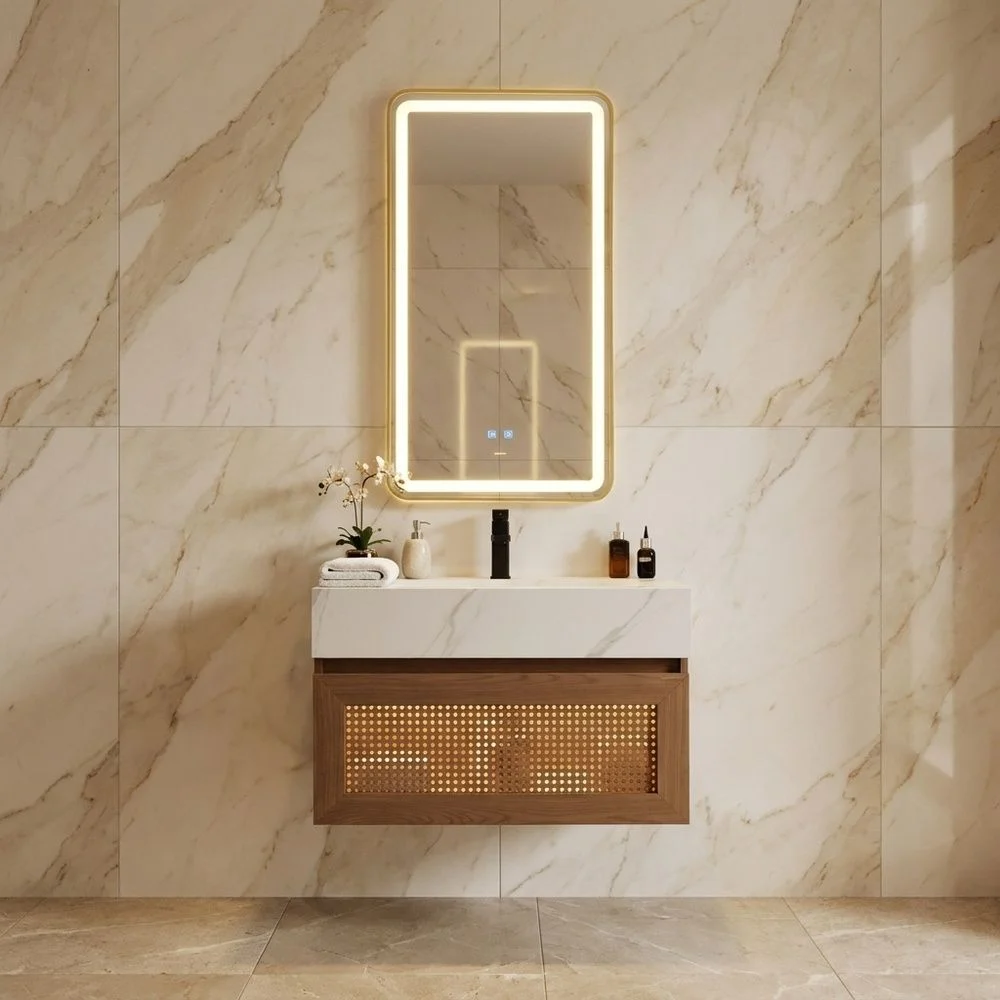

Choosing the right vanity top is key to creating a bathroom that’s both stylish and functional. From holding your everyday essentials to enhancing your grooming routine, the vanity plays an important role in your daily life. At the heart of it sits the vanity top, and the material you choose shapes how your bathroom looks and feels.
In 2026, when it comes to a vanity top, three materials are on top: classic marble, high-performance sintered stone and sleek ceramic. Each has its own personality and aesthetic appeal. Here’s how to find the best vanity top material for your bathroom and your lifestyle:
Why Your Vanity Countertop Matters
A bathroom vanity countertop faces daily splashes, toothpaste, skincare products, hair tools and steam. A beautiful surface that stains, scratches or cracks quickly stops being beautiful. So, the right vanity top material balances three things: appearance, durability and how much upkeep you’re willing to take on.
Marble Vanity Top: Timeless Luxury
Nothing matches the natural drama and appeal of a marble vanity top. Every slab carries its own veining, so no two bathrooms look alike. Marble brings a soft, spa-like elegance that suits both classic and contemporary interiors, instantly lifting a powder room or master ensuite.
What to love:
One-of-a-kind natural patterns
A cool, polished finish that feels premium
Lasting aesthetic appeal that never goes out of style
What to know: Marble is naturally porous. Acidic products such as perfume, citrus-based cleaners and some toiletries can etch the surface, and spills left sitting may stain. It needs sealing and gentle, pH-neutral cleaning. If you love the character of natural stone and enjoy caring for it, marble is the right choice.
Sintered Stone Vanity Top: Modern Strength
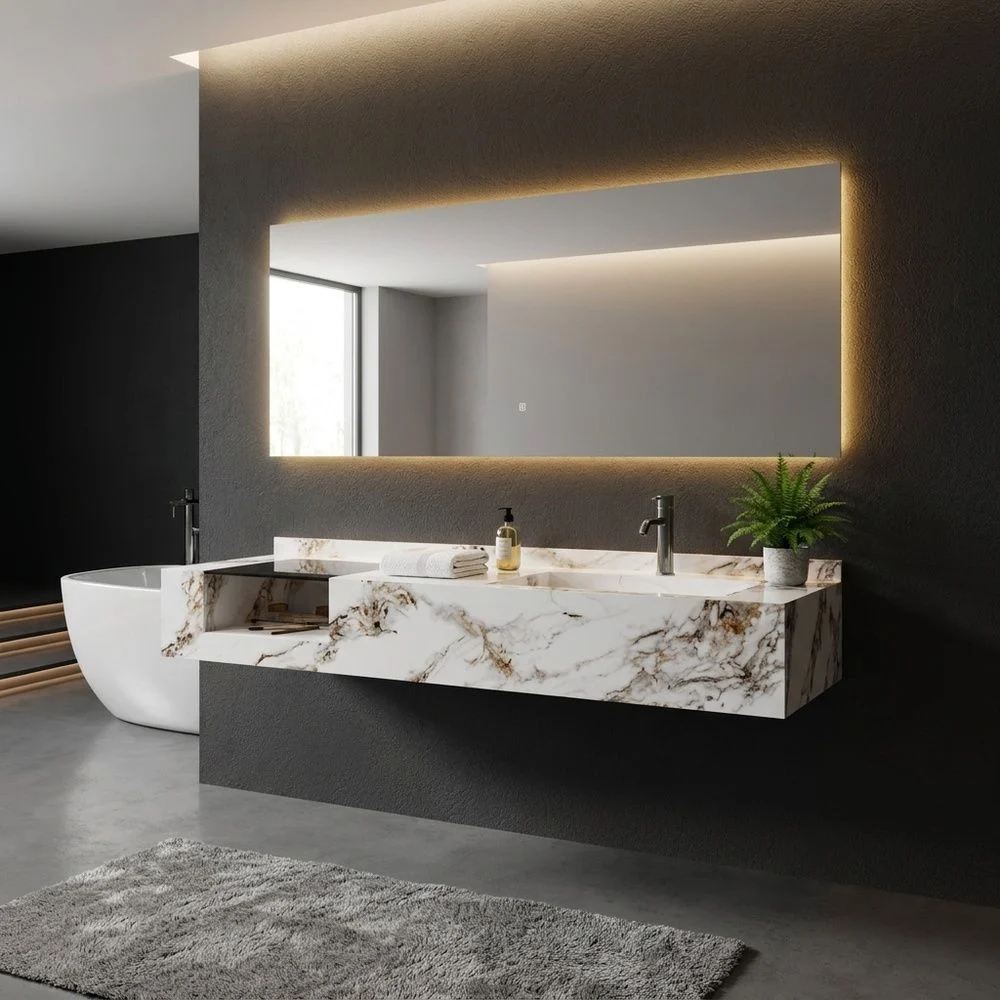
Sintered stone has become a favorite for contemporary bathrooms, and for a good reason. It is made by fusing natural minerals under intense heat and pressure, which creates a dense, non-porous surface. The result is a sintered stone vanity top that resists scratches, stains, heat and moisture far better than most natural materials.
Today’s manufacturing also allows convincing marble, concrete and travertine looks. You get the visual appeal of stone without sensitivity.
What to love:
Excellent resistance to stains, scratches and everyday wear
Easy cleaning with just damp cloth
Slim profiles and large-format slabs for a seamless, modern look
Hygienic, non-porous surface
What to know:
Sintered stone is a premium material, and its hardness means edges and cut-outs need skilled fabrication. For busy family bathrooms, though, it’s hard to beat.
Ceramic Vanity Top: Clean, Smooth and Practical
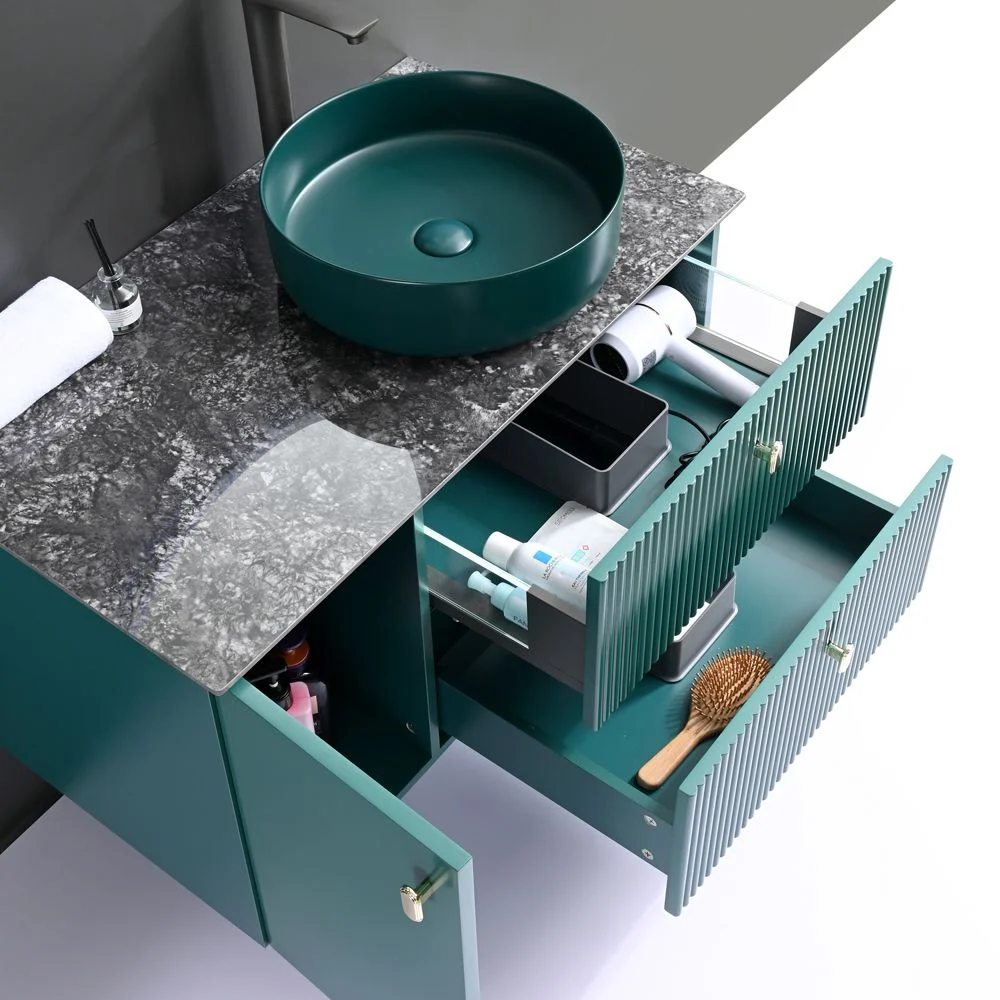
A ceramic vanity top is a familiar favorite. Fired at high temperatures and finished with a glossy glaze, ceramic offers a smooth, hygienic surface that wipes clean in seconds. Many ceramic tops come with an integrated basin, which means no joints, no gaps and nowhere for grime to hide.
What to love:
Seamless, easy-to-clean surface
Wide range of shapes, sizes and finishes
Budget-friendly compared with natural stone
A bright, fresh look that makes small bathrooms feel larger
What to know: Ceramic can chip if something heavy is dropped on it, and the design range is more limited than natural or engineered stone. For everyday practicality and value, it remains hard to fault.
Marble vs Sintered Stone vs Ceramic at a Glance
Look: Marble offers natural luxury, sintered stone offers versatile modern finishes, and ceramic offers a clean, glossy simplicity.
Durability: Sintered stone leads, ceramic follows, and marble needs the most care.
Maintenance: Ceramic and sintered stone are low effort, while marble needs sealing and mindful cleaning.
Budget: Ceramic is usually the most accessible, with marble and sintered stone sitting at the premium end.
| Feature | Marble Vanity Top | Sintered Stone Vanity Top | Ceramic Vanity Top |
| Look and style | Natural veining, unique to every slab; classic, luxurious | Modern finishes, including marble, concrete and travertine looks | Clean, glossy, minimal |
| Durability | Moderate; can scratch and etch | Excellent. Highly resistant to scratches and wear | Good; can chip on heavy impact |
| Stain resistance | Low to moderate; porous, needs sealing | Excellent; non-porous | Very good; glazed surface |
| Heat resistance | Good | Excellent | Very good |
| Moisture resistance | Good when sealed | Excellent | Excellent |
| Maintenance | High; periodic sealing and pH-neutral cleaning | Low; wipe with a damp cloth | Low; wipes clean in seconds |
| Hygiene | Needs care to stay stain-free | Hygienic, non-porous | Hygienic, seamless with an integrated basin |
| Design flexibility | Custom cuts and shapes available | Large slabs, slim profiles, custom fabrication | Ready-made shapes and sizes |
| Budget | Premium | Premium | Most budget-friendly |
| Best for | Guest bathrooms and statement ensuites | Busy family bathrooms and modern designs | Compact bathrooms and quick refreshes |
Which Is the Best Vanity Top Material for Your Bathroom?
- Choose a marble vanity top if you want timeless, natural luxury and don’t mind regular care.
- Choose a sintered stone vanity top if you want maximum durability and easy upkeep in a high-use bathroom.
- Choose a ceramic vanity top if you want a clean, practical surface that fits your budget.
The Final Word
There is no single winner, only the right fit for your home. Keep in mind that marble brings timeless elegance, sintered stone brings resilience with modern style, and ceramic brings easy, everyday practicality. You must choose the vanity top material that suits the way you live, and rest assured that your bathroom will look good for years to come.